A hemp fashion and sustainable corporate gifting brand competing with fast fashion budgets. Over six months we built the organic demand that fast fashion cannot buy, and settled paid into 100+ sales a month at ₹500-800 each.
NPR Design runs SEO and paid media for The Label Gaia, an Indian hemp fashion, accessories and sustainable corporate gifting brand on Shopify. Over six months the account settled at more than 100 sales a month at a cost per sale of ₹500-800, against an average ticket above ₹1,000. Organic visibility roughly tripled over the same period, with around 50,000 website visits and the curve still rising.
Hemp is a category most Indian shoppers have to be taught before they can be sold to. Nobody wakes up wanting a hemp wallet; they want a wallet that lasts, and they need to be convinced hemp is the answer. Two audiences, one budget.
A media budget a fast fashion competitor would spend in a day, against category leaders with far deeper pockets.
Two very different buyers: D2C shoppers buying one wallet, and corporate teams buying 200 gift sets.
Almost all search visibility was branded. Non-brand hemp and sustainable-gifting terms sat outside the top 20.
A content programme answering the questions that come before the purchase: hemp versus leather, hemp in Indian heat, how to wash it, what it actually costs. Each piece links into the collection it supports. Those blogs now pull organic clicks in their own right.
Considered purchases rarely convert on first sight. Budget shifted towards retargeting site visitors, add-to-cart abandoners and catalogue viewers. Retargeting went on to carry the majority of purchases every month after the restructure.
The B2B side got separate campaigns, separate creative and a lead form rather than a cart. Gifting leads came in at a fraction of the cost of a D2C sale, and at far larger order values.
Roughly 50,000 visits came through the site across the engagement, and the curve is still rising. The blog programme is what compounds: pieces written to answer a question keep earning traffic long after they are published, which is the opposite of how paid behaves when you switch it off. That is the case we make for SEO, GEO and AEO on every ecommerce account.
| Non-brand keyword | Avg. position | Cluster |
|---|---|---|
| non leather wallets brands in india | 1.0 | Wallets |
| hemp shoes stronger than canvas | 2.0 | Footwear |
| hemp bag price | 2.0 | Bags |
| hemp-based sneakers durability | 2.25 | Footwear |
| natural hemp bags | 3.2 | Bags |
| pure hemp bags | 4.0 | Bags |
| hemp purse | 4.0 | Accessories |
| hemp bag | 4.7 | Bags |
| hemp hats | 5.4 | Accessories |
| hemp bags | 5.4 | Bags |
| hemp bag meaning | 5.5 | Category education |
| best laptop bags for women in india | 6.6 | Laptop bags |
| hemp card holder | 6.8 | Accessories |
| hemp kurta men | 8.1 | Apparel |
| hemp kurta | 9.5 | Apparel |
Brand terms excluded. Average position across all countries. Every keyword here sits inside the top 10 worldwide, and more than 30 non-brand hemp terms now do. The sustainable corporate gifting cluster carries the largest search volume in the account and currently sits at positions 15 to 50, that is the next content sprint.
The most interesting queries in this account are not keywords at all. Search Console now shows full sentences typed into AI assistants and answer engines, and thelabelgaia.com is being surfaced against them.
“which is better for sustainable travel bags in india, recycled pet fabric ones or organic cotton ones…”, surfaced at position 8.4
“what are the benefits of hemp clothing over traditional fabrics?”, position 1
“what’s the best website for sending eco-friendly corporate gifts that include plants?”, position 8.5
“is it better for the planet to buy one high quality bag or keep buying cheaper ones…”, position 1
This is why the content is written answer-first. Questions get a direct answer in the opening lines, comparisons get a table, and entities get schema, the same structure that wins featured snippets is what makes a page quotable by GEO and AEO engines.
Retargeting carried the majority of those sales once the budget was restructured, with catalogue and shopping ads feeding it. Corporate gifting ran as a separate funnel on lead forms rather than a cart. Google Ads sat alongside as demand capture and Performance Max.
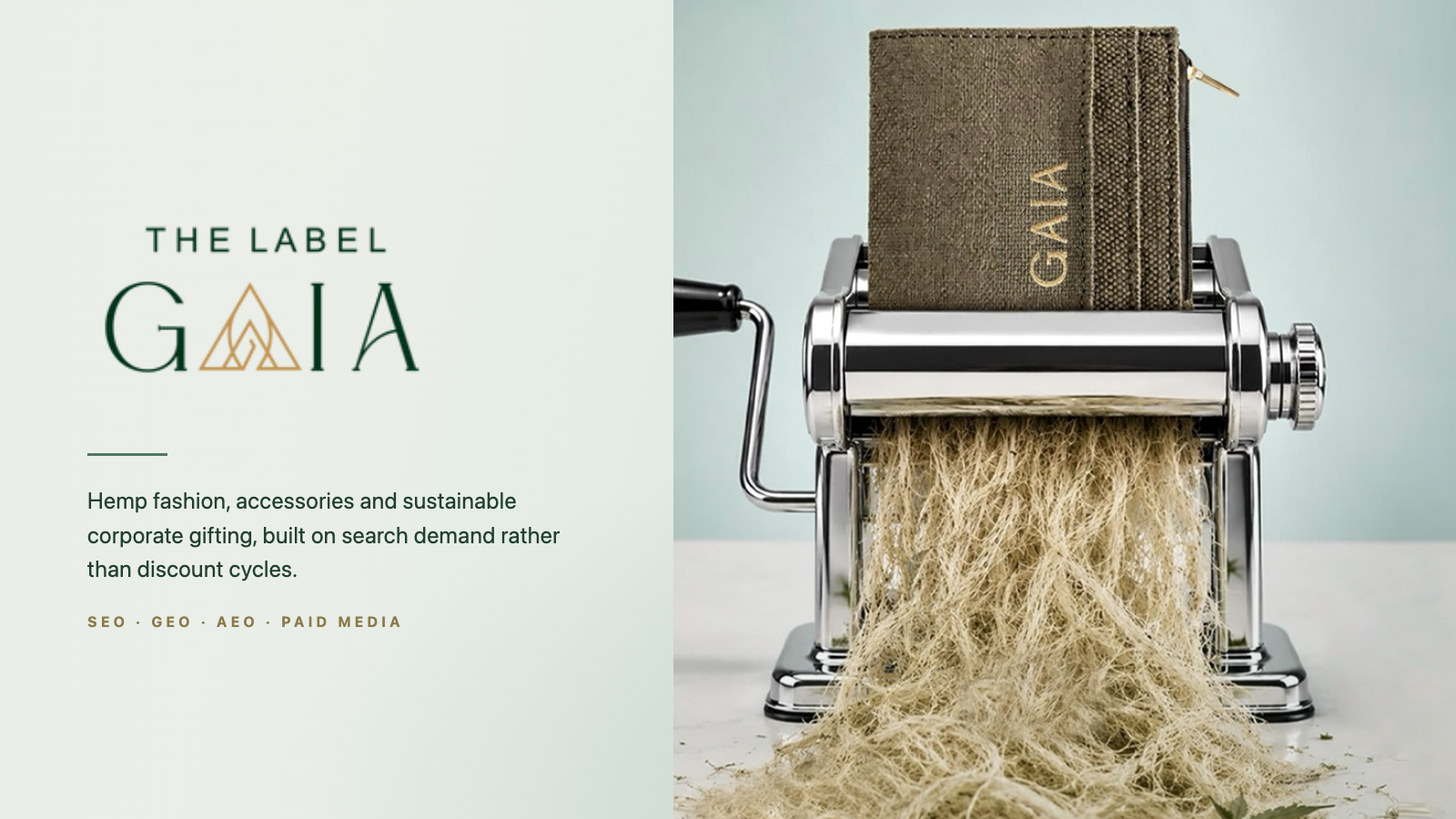
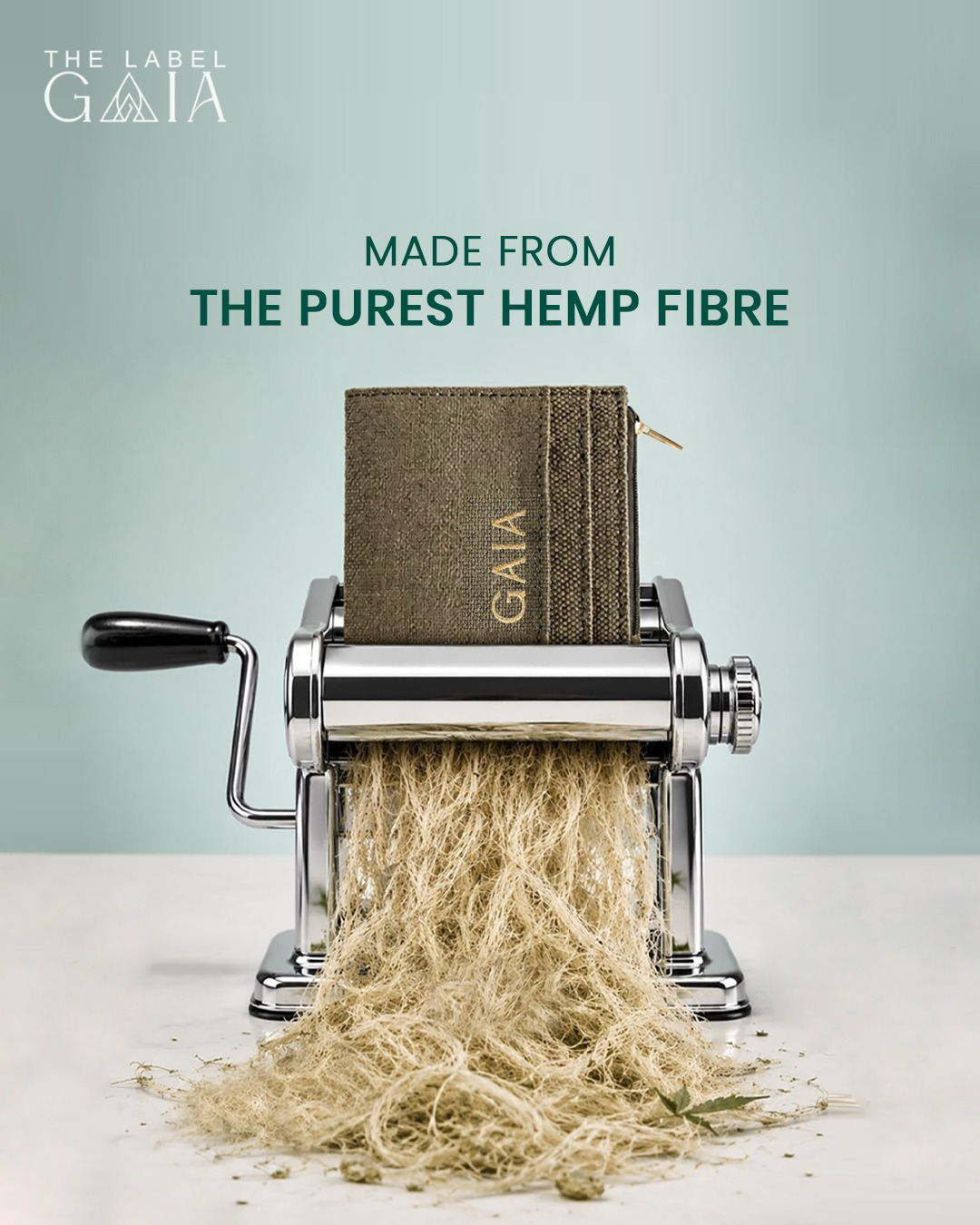
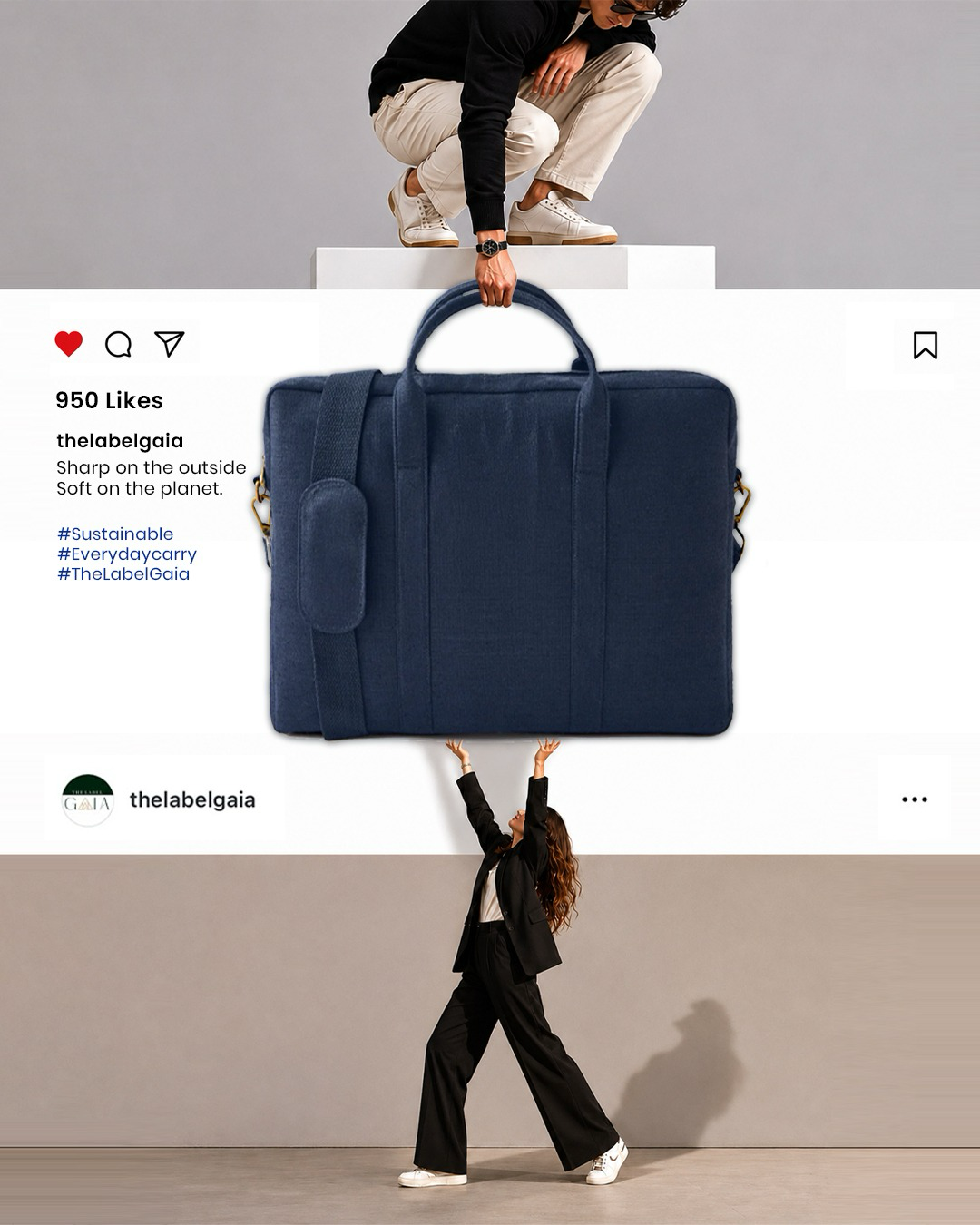
Hemp is a material story, so the creative had to make the material the hero. Product held centre frame, one line of copy, and a reason to care that was not just the price.
Retargeting outperformed every prospecting audience, on every metric, in every month. In a considered category, the second visit is the one that buys.
Creative quality, not budget, moved the numbers. The best-performing ad-set held a 3.2% CTR while the weakest sat under 1% on comparable spend.
Video views bought reach, not revenue. A large video campaign returned a handful of clicks and no sales, so budget moved to shopping and search.
Corporate gifting is the cheapest demand in the account by a wide margin. Sustainable gifting terms sit at positions 15-50, which is the clearest SEO opportunity left on the site.
Paid search terms fed the content plan. Wallet and laptop bag queries came in through Google Ads first, then became blog and collection targets.